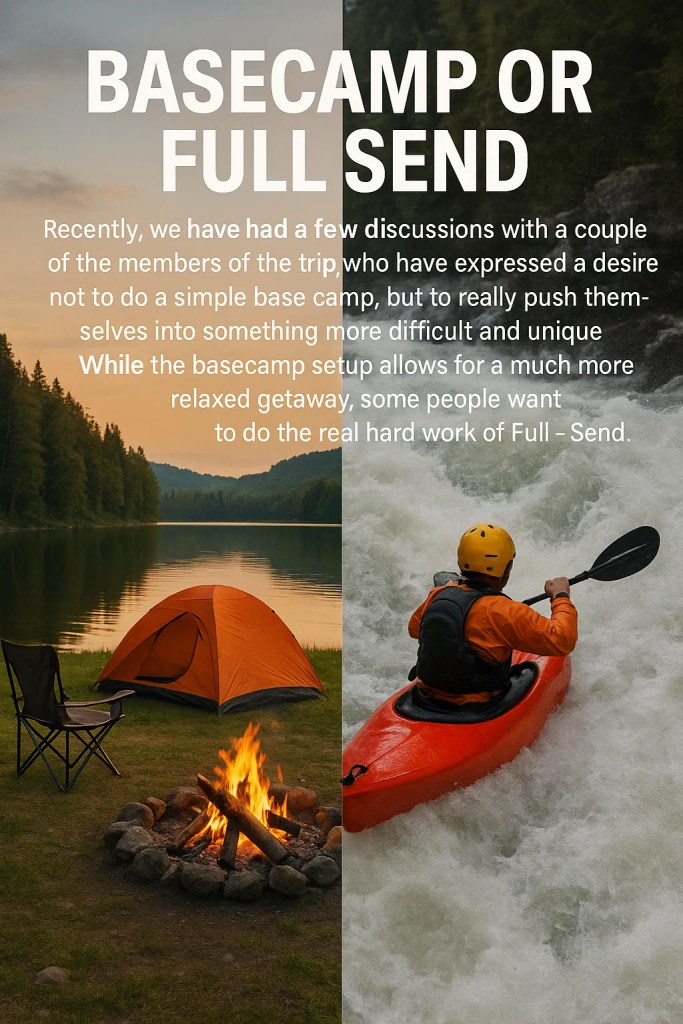
How hard do you want this trip to be?
We’ve spoken with several trip members who aren’t satisfied with a simple base-camp retreat—they want a true call to adventure. While the base-camp option promises a relaxed getaway, some of you are ready to embrace the Full-Send challenge and push yourselves far beyond the ordinary.
Benefits of Basecamp
A base-camp version lets us establish a central hub, complete with a spacious social yurt, where we can relax, restock, and plan our outings. From this home base, we’ll launch mini-expeditions in 2–4-person canoe teams—each a single-day or overnight adventure. Return triumphant, swap team members if you’re eager for more, or head back to camp to recharge.
Make it as challenging or as leisurely as you like. Spend your days fishing or boating, enjoy easy access to supplies and creature comforts, or simply stay at camp when you’re not up for a longer excursion.
The Full-send Experience
What we call a Full Send is a relentless push into the wild, venturing deeper into the backcountry and exploring the most remote lakes the Boundary Waters has to offer. You’ll face portages that test your strength, paddle through winding creeks and across open water, and grind out miles in a single day. We will endure bad weather and at times be forced to shelter under little more than tarps in less-than-ideal spots.
Is it fun? That depends on your definition of fun. Will it be an adventure? Absolutely.
Gear requirements will change
A Full Send demands a whole new approach to gear. You may need to purchase or redesign your kit for maximum lightness, leaving behind non-essential comfort items. Every calorie you consume must be carried on your back without excess weight.
All of your equipment from tent, sleeping blanket, clothing, and ancillary gear must fit into a true hiking pack. A generic backpack won’t suffice. You can’t simply throw a four-person tent from Walmart into your bag; it will be far too bulky and monopolize your packing space. Choose ultralight, purpose-built gear to ensure you can move fast and stay agile in the backcountry.
PLEASE REFER BACK TO THE GEAR LIST RECOMMENDATIONS PAGE.
Poratages can be a bitch
Many portages aren’t gentle hiking trails but rugged, steep, and overgrown routes—and carrying a twenty-foot canoe overhead through terrain like that is both punishing and painful. Yoke pads only alleviate so much of the strain. On most portages, you must first haul all your gear to the far side, then return to retrieve the canoe, making each crossing at least three separate trips. If you discover you’ve left something behind, you’ll have to make a fourth trip so attention to detail matters as much as strength.
Fitness and training
If you’re serious about tackling the Full Send, you need a solid training regimen and it should start now. I can put together a 100-day workout plan customized for this expedition, complete with spreadsheets to track weight loss, strength gains, and fitness milestones.
Tony and I spent months preparing for our Full Send, shedding nearly 100 pounds between us. Without that pre-trip training, we would have struggled much more, especially considering how out of shape we were when we began. Prioritize your fitness now, and you’ll arrive at the start line stronger, faster, and ready for every challenge the backcountry throws at you.
The choice is up to you.
Please take a moment to reflect on the implications of choosing a Full Send. This isn’t a casual outing, it means logging significant miles, performing setup and teardown each day, and navigating multiple portages daily. Your decision affects the entire itinerary, group pace, and logistics. That’s why I’m asking every expedition member to complete the survey indicating your preference: Full Send or Basecamp. If the majority favors one option, we’ll adjust our plans accordingly to ensure the trip meets everyone’s expectations and abilities.
 Basecamp 2025
Leave a comment